
a field guide to trees of ontario
A field guide to Ontario’s trees provides essential tools for plant identification, offering detailed descriptions, illustrations, and keys for accurate species recognition within the province.
These guides empower both amateur naturalists and seasoned botanists to explore and understand the diverse arboreal landscape of Ontario, fostering appreciation.
Utilizing a field guide enhances outdoor experiences, enabling users to confidently name trees, learn about their ecological roles, and contribute to conservation efforts.
What is a Field Guide?
A field guide, specifically for Ontario trees, is a portable reference designed for outdoor use, aiding in the identification of plant species directly in their natural habitat. Unlike comprehensive botanical texts, field guides prioritize practicality and accessibility. They typically feature concise descriptions, focusing on key characteristics like leaf shape, bark texture, and overall tree form.
Ontario tree field guides often incorporate visual aids – detailed illustrations or high-quality photographs – to facilitate quick and accurate comparisons. Many guides organize trees by family, simplifying the identification process. They may also include range maps, indicating where specific species are commonly found within the province.
Essentially, a field guide serves as a user-friendly companion for anyone interested in learning about and appreciating the trees around them, bridging the gap between scientific knowledge and practical observation. They are invaluable tools for both beginners and experienced naturalists.
Why Identify Trees?
Identifying trees in Ontario enhances our connection with the natural world, fostering a deeper appreciation for the province’s biodiversity; Knowing tree species allows us to understand their ecological roles – providing habitat, influencing climate, and contributing to soil health.
Tree identification is crucial for conservation efforts. Recognizing native species versus invasive ones helps in managing ecosystems and protecting vulnerable populations. Furthermore, understanding tree characteristics can inform responsible forestry practices and sustainable land use.
Beyond ecological benefits, identifying trees enriches outdoor experiences, transforming a simple walk into an educational adventure. It allows us to learn about the history and cultural significance of trees, and even utilize their resources responsibly. Ultimately, tree identification empowers us to become informed stewards of Ontario’s forests.
Common Ontario Tree Families
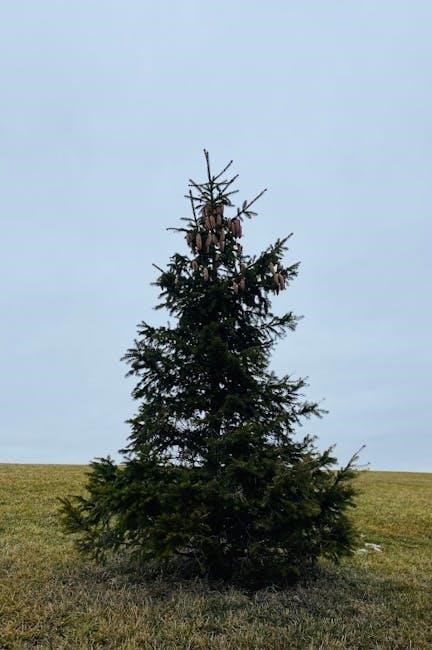
Ontario’s forests are structured around distinct tree families, like Maple (Aceraceae), Birch (Betulaceae), and Pine (Pinaceae), each with unique characteristics aiding identification.
Maple Family (Aceraceae)
The Maple Family (Aceraceae) is a prominent group in Ontario’s forests, easily recognized by their opposite leaf arrangement and distinctive winged seeds, known as samaras. Key genera include Acer, encompassing species like Sugar Maple, Red Maple, and Silver Maple.
Leaf characteristics are crucial for identification; maple leaves typically exhibit palmate venation – radiating veins from a central point – and varying degrees of lobation. Bark textures differ between species, ranging from smooth in younger trees to furrowed and plated with age.
Sugar Maples boast vibrant fall foliage, while Red Maples display reddish twigs and buds. Understanding these subtle differences, alongside leaf shape and size, is vital for accurate identification using a field guide. The family’s economic importance stems from maple syrup production and valuable hardwood timber.
Birch Family (Betulaceae)
The Birch Family (Betulaceae) is a significant component of Ontario’s woodlands, characterized by its simple, alternate leaf arrangement and catkin-bearing flowers. This family includes popular genera such as Betula (Birch), Populus (Poplar), and Alnus (Alder).
Birches are particularly noted for their distinctive bark, often peeling in papery layers – most famously in White Birch. Poplars generally exhibit smoother bark and triangular-shaped leaves that flutter in the breeze. Alders are often found in moist habitats and have cone-like structures.
A field guide aids in differentiating these species by focusing on subtle features like bud shape, leaf serrations, and bark coloration. Recognizing these details is essential for accurate identification. The Birch Family plays a crucial ecological role, providing habitat and food sources for various wildlife.
Pine Family (Pinaceae)
The Pine Family (Pinaceae) represents Ontario’s coniferous backbone, dominated by evergreen trees bearing needle-like or scale-like leaves. Key genera include Pinus (Pine), Picea (Spruce), Abies (Fir), and Larix (Larch – deciduous conifer). Identifying members of this family relies on observing needle arrangement, cone characteristics, and overall tree shape.
Pines typically have needles in bundles, while Spruces possess four-sided needles attached individually. Firs exhibit flat needles with rounded bases, and Larches shed their needles annually. A field guide highlights these distinctions.
Cone size, shape, and scale texture are also vital clues. The Pine Family is ecologically important, providing year-round shelter and contributing significantly to Ontario’s forest ecosystems. Accurate identification enhances appreciation for these resilient trees.

Identifying Trees: A Step-by-Step Approach
A field guide emphasizes a systematic approach: observe leaves, bark, and overall form, utilizing keys and illustrations for accurate tree identification in Ontario.
Leaf Shape and Arrangement
Leaf characteristics are fundamental to tree identification, as detailed in any comprehensive field guide. Begin by noting the leaf shape – is it lobed, toothed, or smooth-edged? Common shapes include ovate, lanceolate, and cordate.
Next, observe the leaf arrangement on the twig. Leaves can be arranged alternately (one leaf per node), oppositely (two leaves per node), or whorled (three or more leaves per node).
Simple leaves have a single blade, while compound leaves are divided into multiple leaflets. A field guide will illustrate these variations clearly. Consider leaf size, texture (smooth, hairy), and the presence of any unique features like glands or stipules.
Comparing these details with illustrations and descriptions in a field guide will significantly narrow down the possibilities and lead to accurate identification.
Bark Characteristics
Bark provides crucial clues for tree identification, often remaining consistent even when leaves are absent. A good field guide emphasizes detailed bark observation. Note the bark’s color – is it gray, brown, reddish, or white?
Texture is also key: is the bark smooth, rough, furrowed, scaly, or peeling? Some trees, like birch, have distinctive peeling bark. Observe the pattern of ridges and furrows – are they deep or shallow, regular or irregular?
Lenticels, small pores on the bark, can also be helpful. Consider the thickness of the bark and whether it has any unique features like warty growths or resin pockets.
Comparing these characteristics with images and descriptions in a field guide will aid in accurate species determination, even in winter.
Tree Silhouette and Overall Form
A tree’s overall shape, or silhouette, is a valuable identification feature. Field guides highlight typical forms – conical, rounded, vase-shaped, or weeping. Observe the branching pattern: is it symmetrical or asymmetrical, upright or spreading?
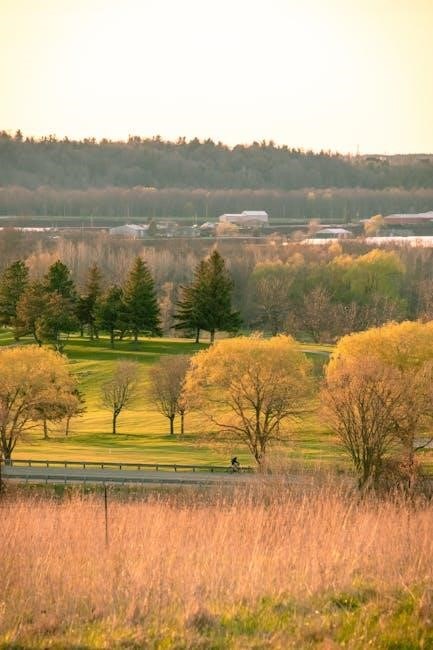
Consider the tree’s height and width relative to others nearby. Is it a tall, slender tree, or a shorter, more robust one? Note the angle of the main branches – do they ascend, descend, or grow horizontally?
Pay attention to the density of the crown; is it open and airy, or dense and full? Observing the tree’s form in winter, when leaves are absent, can be particularly revealing.
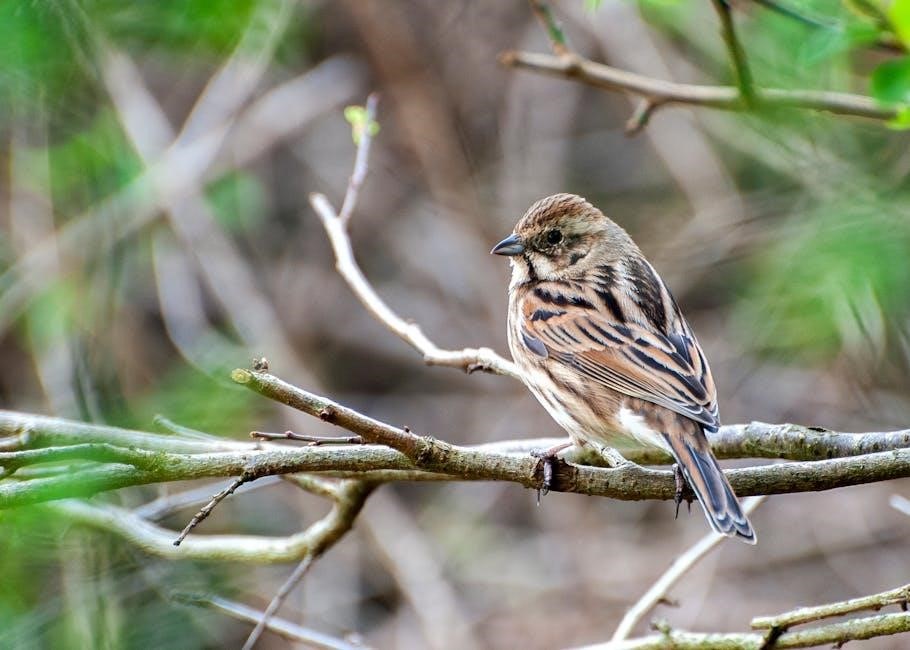
Combining silhouette observations with other characteristics, as detailed in a field guide, significantly improves tree identification accuracy.

Deciduous Trees of Ontario
Ontario’s deciduous trees, like maples and birch, lose leaves annually, offering seasonal identification challenges and opportunities detailed within comprehensive field guides.
Sugar Maple (Acer saccharum)
The Sugar Maple, a quintessential Ontario tree, is renowned for its vibrant fall foliage and maple syrup production. Field guides detail its 5-lobed leaves, measuring roughly 8-16cm, with deep U-shaped sinuses.
Bark on young trees is smooth and grey, becoming furrowed and plated with age. Mature trees exhibit a dense, rounded crown. Identification is aided by opposite branching and the presence of terminal buds.
These guides also highlight the tree’s preference for well-drained soils and its role in supporting diverse wildlife. Look for samaras (winged seeds) in pairs, descending and spinning like helicopters. The Sugar Maple is a significant component of Ontario’s forests, valued for its timber and aesthetic beauty.
Distinguishing it from Red Maple involves noting the more uniform leaf lobes and less reddish tinge in fall coloration, as detailed in reliable field resources.
Red Maple (Acer rubrum)
The Red Maple is a highly adaptable and widespread Ontario tree, easily recognized by its three to five-lobed leaves, often displaying reddish stems and undersides. Field guides emphasize the sharply angled sinuses between the lobes, differentiating it from the Sugar Maple.
Bark is smooth and grey on younger trees, maturing to darker, furrowed ridges. A key identification feature is the persistent reddish coloration of buds and twigs throughout the winter. The tree’s crown is typically rounded, though variable depending on growing conditions.
Ontario field resources note its tolerance for wetter soils and its brilliant red fall display. Samaras appear in pairs, often with a wider angle than those of the Sugar Maple. This species plays a vital ecological role, providing food and habitat for numerous animals;
Careful observation of leaf shape and bud characteristics, as detailed in comprehensive guides, ensures accurate identification.
White Birch (Betula papyrifera)
The White Birch, also known as Paper Birch, is a strikingly beautiful and easily identifiable Ontario tree, famed for its bright white, peeling bark. Field guides highlight this characteristic as a primary identification feature, noting the horizontal lenticels (small pores) on the bark’s surface.
Leaves are oval-shaped with doubly serrated edges, turning a golden yellow in the fall. The tree’s twigs are slender and often display a waxy coating. Buds are sharply pointed and reddish-brown. Its overall form is typically slender and upright, with a delicate, open crown.
Ontario resources emphasize its preference for well-drained soils and its role as a pioneer species in disturbed areas. The bark was historically used by Indigenous peoples for canoes and writing material.
Detailed illustrations in field guides assist in distinguishing it from similar birch species.
Coniferous Trees of Ontario
Field guides expertly detail Ontario’s coniferous trees, showcasing needle-like or scale-like leaves, cone structures, and evergreen characteristics for accurate identification.
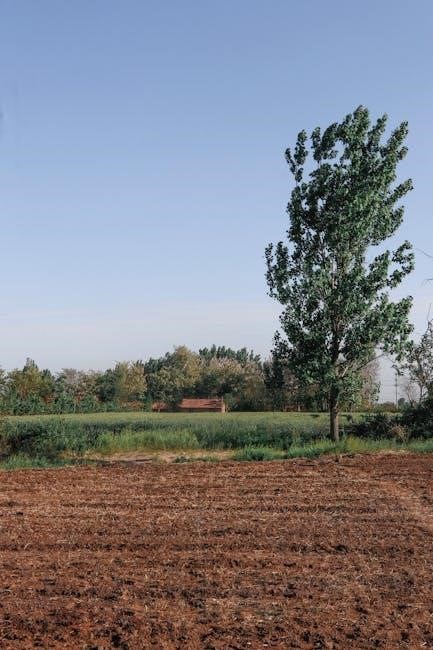
Eastern White Pine (Pinus strobus)
Eastern White Pine, a majestic conifer, is readily identifiable using a field guide. Look for its long, soft needles, typically in bundles of five, a key characteristic noted in guides.
The bark on young trees is smooth and gray, becoming deeply furrowed and plated with age – a feature detailed in visual guides. Cones are slender, cylindrical, and 4-8 inches long, often slightly curved, and are also illustrated in field resources.
This pine boasts a tall, straight trunk and a pyramidal crown, described in many guides. Its height can reach impressive levels, making it a dominant feature of Ontario’s forests. Field guides emphasize its importance as a historical timber source and its current ecological role.
Pay attention to the subtle differences highlighted in identification keys to distinguish it from similar pine species, ensuring accurate recognition with the aid of a comprehensive field guide.
Eastern Hemlock (Tsuga canadensis)
Eastern Hemlock identification relies on key features detailed in field guides. Its short, flat needles, dark green in color, are arranged spirally along the twig, differing from pines. Guides emphasize the needles’ rounded tips and two white bands underneath.
The bark is reddish-brown and deeply furrowed, becoming scaly with age – a characteristic illustrated in many resources. Hemlock cones are small, egg-shaped, and dangle from the branches, unlike the upright cones of pines.
Field guides highlight the tree’s graceful, drooping leader and its preference for moist, shaded habitats within Ontario’s forests. It’s crucial to note its vulnerability to the hemlock woolly adelgid, a pest discussed in some guides.
Using a field guide’s comparative keys helps differentiate it from similar species, ensuring accurate identification and appreciation of this beautiful, yet threatened, conifer.
Balsam Fir (Abies balsamea)
Balsam Fir is readily identified using a field guide, focusing on its fragrant needles. These needles are flat, dark green, and possess a noticeable silvery-blue hue, differing from spruce needles which are often prickly. Guides illustrate the needles’ rounded tips and their attachment to the twig via suction-cup like bases.
The bark is smooth and gray, developing resin blisters with age – a unique characteristic highlighted in identification keys. Balsam Fir cones are upright, cylindrical, and disintegrate on the branch, leaving only the central spike.
Field guides emphasize its conical shape and preference for cool, moist environments throughout Ontario. The resin is historically used for Canada balsam, a mounting medium for microscope slides.
Careful comparison with similar conifers, aided by a field guide’s illustrations, ensures accurate identification of this iconic Ontario tree.

Resources for Tree Identification
Online tree atlases, comprehensive field guides, and visits to local parks and arboretums provide invaluable tools for successful tree identification in Ontario.
Online Tree Atlases and Databases
Numerous online resources facilitate tree identification throughout Ontario, offering accessible information for enthusiasts of all levels. The Ontario Trees and Shrubs website is a comprehensive database featuring 158 species, searchable by common or Latin names.
This platform provides detailed species pages, including plant family origins and illustrative leaf drawings, mirroring the content found in traditional field guides. The Trees for Toronto project’s Tree Species Pages, a collaboration between the ROM and the City of Toronto, also offers similar resources.
Furthermore, interactive Tree Atlas maps allow users to select a region and discover native tree species suitable for planting, aiding in informed landscaping and conservation efforts. These digital tools complement traditional field guides, offering a dynamic and readily available means of tree identification.
Field Guides and Books
Traditional field guides remain invaluable tools for Ontario tree identification, offering portable and detailed resources for outdoor exploration. “Ontario Trees: A visual guide to the most important species” by Jeffrey C. Domm, stands out with its highly detailed, photo-realistic illustrations.
This guide simplifies identification across all seasons, covering 120 common and important species. Additionally, “Conifers of Ontario: Identification Keys for Students, Notes for Teachers” provides specialized knowledge for coniferous trees.
These publications offer structured keys, descriptive text, and illustrative plates, enabling users to accurately determine tree species. While digital resources expand accessibility, physical field guides provide a tactile and reliable experience, particularly in areas with limited internet connectivity, complementing online databases.
Local Parks and Arboretums
Ontario’s local parks and arboretums serve as living laboratories for tree identification, offering opportunities to apply knowledge gained from field guides in real-world settings. The Trees for Toronto project, a collaboration between the ROM and the City of Toronto, has installed identification plaques in select parks.
These plaques provide immediate access to tree names (English, French, and scientific), family, and origin, alongside leaf illustrations, enhancing the learning experience. Visiting these sites allows for direct comparison with field guide descriptions and illustrations.
Arboretums, with their curated collections, present a diverse range of species in a concentrated area, facilitating comparative study and solidifying identification skills. Combining field guide use with park visits creates a powerful learning synergy.

Trees for Toronto Project & Identification Plaques
The ROM and City of Toronto collaborated to create tree species pages, resembling a field guide, with plaques in parks for on-site identification.
The ROM and City of Toronto Collaboration
The “Trees for Toronto” project represents a significant partnership between the Royal Ontario Museum (ROM) and the City of Toronto’s Urban Forestry department, aiming to enhance public understanding and appreciation of the city’s urban forest.
This collaboration resulted in the development of detailed Tree Species Pages, intentionally designed to mirror the format and functionality of a traditional field guide. These pages provide comprehensive information, including both English and French common names, as well as the scientific (Latin) name for each tree species.
Furthermore, the project extends beyond digital resources; identification plaques have been strategically affixed to trees within select City of Toronto parks. This allows citizens to directly connect with the information presented online, fostering a hands-on learning experience and promoting a deeper connection with the natural environment.
The initiative effectively bridges the gap between museum expertise and municipal forestry, creating a valuable resource for residents and visitors alike.
Using Identification Plaques in Parks
The strategically placed identification plaques throughout City of Toronto parks offer a unique opportunity to utilize the “Trees for Toronto” project’s resources in a real-world setting, functioning as an extension of a traditional field guide.
By visiting a tree with a plaque, individuals can access detailed information about the species, including its common names (in both English and French), scientific name, and family origin, simply by referencing the plaque itself or by using a smartphone to “View the Plaque…” online.
This interactive approach encourages direct observation and comparison with the line drawings and descriptions found in online resources, solidifying learning and enhancing tree identification skills.
These plaques transform parks into outdoor classrooms, making botanical knowledge accessible to everyone and fostering a greater appreciation for Toronto’s urban forest.











Leave a Comment